
- Taos Amrouche (1913 – 1976, Algeria) – Solitudes ma mère (‘Solitude, My Mother’, 1995) is about the author’s mother, Fadhma Amrouche, who, like the author herself, was a prominent performer of traditional Amazigh music. The autobiography of her mother, Histoire de ma vie (1968, English trans. My Life Story – The Autobiography of an Amazigh Woman, 2009), can be found in A: Autobiography.
- Maqbūl Mūsā al-ʿAlawī (1968-, Saudi Arabia) – Ziryāb (‘Ziryab’, 2014). At the centre of this novel is the life of the singer, oud player, composer, and poet, Ziryāb (meaning ‘black bird that sings beautifully’), who lived from 789 until 857. Ziryāb played for the Abbasid Caliph Harun al-Rashid, something that led to the envy of his teacher who threatened him. He was forced to flee from Baghdad to Al-Andalus, reigned at the time by lover of the arts Abd al-Rahman II, where he was able to retrieve his life of making music. Not only does the novel shed light on the history of Arab music, but also on life at the royal courts (reference) (also in H: Historical Novels: al-Andalus (Andalusia) (711 – 1492 CE).
- Wāsīnī al-Arʿaj (1954-, Algeria) – Ramād al-Sharq: al-Dhʾib Alathī Nabata fī al-Barārī (‘Ashes of the east: the wolf who grew up in the wilderness’, 2013). This novel centres a young Arab Jazz musician who explores his identity by including different musical elements in the symphony he is writing titled ‘Ramād al-Sharq’ (‘Ashes of the east’). As such, he reflects on his life in the USA and the stories of his grandfather, as well as Arab historical figures, such as the Syrian Yusuf al-Azmeh and the Saudi Prince Faisal. The novel is the second part of a two-part series under the title Ramād al-Sharq, the first is entitled Ramād al-Sharq: Kharīf Nīwyūrk al-Akhīr (see in 2001: 9/11 Twin Towers Attack)
- ʿAlī Badr (?, Iraq) – ʿĀzif al-Ghuyūm (‘Musician of the clouds’, 2016) tells the story of the cellist Nabīl who flees Iraq to Brussels, Belgium, because Islam extremists find his music playing sinful. In Belgium, he ends up disillusioned to find that the Europe he had idealised for its music, romanticism, and musicians, is not reflected in the neighborhood he comes to live in, which is poorer than his neighborhood in Baghdad. The novel is a critical reflection of cultural identity in Europe and the fact that Nabīl remains an outsider in this multicultural society (also in W: Outside the Arab world: Europe: Belgium).
- Aziz Chouaki (1951-, Algeria) – L’étoile d’Alger (2002, English trans. The Star of Algiers, 2004). The young singer Moussa Massy and his Arab African fusion band try their best to become successful in a turbulent Algiers in the 1990s when the FIS, an Islamic political party, gains popularity. Moussa lives in three rooms with 13 members of his family, and shares one room with his two brothers, one of which is a member of the FIS (reference). When the FIS wins the election in 1990, Moussa is banned from preforming and descends into a life of alcohol and drug abuse (also in C: Cities: Algeria: Algiers and 1991 – 2002 Algerian Civil War).
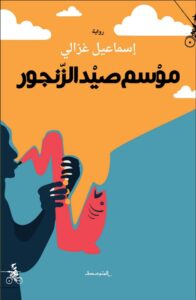
- Ismāʾīl Ghazālī (1977-, Morocco) – Mawsim Ṣayd al-Zanjūr (‘The season of pike fishing’, 2013). A Franco-Moroccan saxophonist with Amazigh roots is invited to go pike fishing in the Aglmam Azgza lake in the Atlas Mountains by a Moroccan singer-friend (reference). While he stays in a hotel by the lake, he recalls his French friend who committed suicide after completing a novel, and meets a score of characters, both foreign and local but all in search of something, as he learns about the mysterious history of the lake and, in parallel, his own relation to the lake that predated his birth (also in N: Nature: Waters).
- Fawwāz Ḥaddād (1947-, Syria) – ʿĀzif Munfarid ʿalā al-Biyānū (‘Solo piano music’, 2009). This novel is set in a Syria dominated by a police state, where the individual is constantly watched by the secret services, and tensions are rising between secularists and Islamists. The professor and amateur music connoisseur Fātiḥ, known for his strong opposition to Islam, is regularly visited by an investigator, Salīm, who seeks his cooperation on matters of terrorism. After giving a lecture against teaching religion in schools, Fātiḥ comes to believe he is being targeted by the state for his anti-religious view (also in G: Dysfunctional Governance: Militarism, Secret Services, and the Police State).
- Lamia Ziadé (1968-, Lebanon) – Ȏ nuit, ȏ mes yeux / Yā Layl, Yā ʿAyn (‘Oh night, of my eyes’, 2015), is a graphic novel about the history of Arab musicians, cabaret performers and other artists, mostly from Cairo. Illustrations of the artists accompany the different texts that each focus on the stories of an artist. One example is that of Fairouz titled ‘Fairouz in my Grandfather’s Shop’, which was translated to English for the online magazine Words Without Border (reference).
=
Refrences:
In order of appearance
- Hāshim Shafīq. 2015. “‘Ziryāb’ Riwāyah al-Saʿūdī Maqbūl al-ʿAlawī Bayn Baghdād wa al-Andalūs: Mulūk wa Diasāʾis wa Funūn.” www.alquds.co.uk, 24 October 2015 https://www.alquds.co.uk/%EF%BB%BF-%D8%B2%D8%B1%D9%8A%D8%A7%D8%A8-%D8%B1%D9%88%D8%A7%D9%8A%D8%A9-%D8%A7%D9%84%D8%B3%D8%B9%D9%88%D8%AF%D9%8A-%D9%85%D9%82%D8%A8%D9%88%D9%84-%D8%A7%D9%84%D8%B9%D9%84%D9%88%D9%8A/ (last accessed 5 November 2021)
- Deborah Levy. 2006. “‘The Star of Algiers’ by Aziz Chouaki, trans. Ros Schwarts and Lulu Norman.” www.independent.co.uk, 11 August 2006, https://www.independent.co.uk/arts-entertainment/books/reviews/the-star-of-algiers-by-aziz-chouaki-trans-ros-schwartz-amp-lulu-norman-411327.html (last accessed 9 March 2019)
- Khaled El Aref. 2016. “I Speak Tamazight, but in Arabic: Contesting the Cultural Terrain in Morocco.” International Letters of Social and Humanistic Sciences,70-83, p. 77
- Translated by Edward Gauvin. 2018. ‘Fairuz in My Grandfather’s shop.’ Words Without Borders, July 2018 https://www.wordswithoutborders.org/article/july-2018-lebanon-fairuz-in-my-grandfathers-shop-lamia-ziade-edward-gauvin